
A Programmatic SEO Tool for AI Agents: From Structured Data to Published Pages
A programmatic SEO tool for AI agents is a controlled publishing system that turns well-defined records, attributes, and relationships into useful, indexable pages. Done well, an AI agent does more than fill a template. It checks whether each record has enough substance, applies page rules, and produces pages that deserve to exist.
Your business may already have the raw material: a spreadsheet with products, integrations, locations, service types, use cases, or software comparisons. Each row can look like a potential URL. Handing that sheet to an AI tool and publishing pages may seem efficient.
It also creates versions of the same vague paragraph. Missing fields become polished prose, and visitors find no reason to choose your page over a directory, marketplace, or competitor.
The hard part is not generating text at volume. It is deciding what the data means, which combinations represent distinct search needs, what each page must contain, and when the system must refuse publication. A location page without local detail is not local content. An integration page that cannot explain the workflow is not an integration guide. A comparison page built from empty attributes is a claim-shaped template.
For founders and lean marketing teams, that distinction matters. You do not have time to inspect every URL after publication, rewrite thin pages individually, or discover that a large release created maintenance work instead of organic growth.
The goal is not a bigger sitemap. Build a repeatable way to turn a source of truth into pages with clear purpose, dependable details, and enough variation to answer the query behind each URL.
That starts with the data model. Not a prettier template.
A Thousand URLs Cannot Fix a Weak Data Model
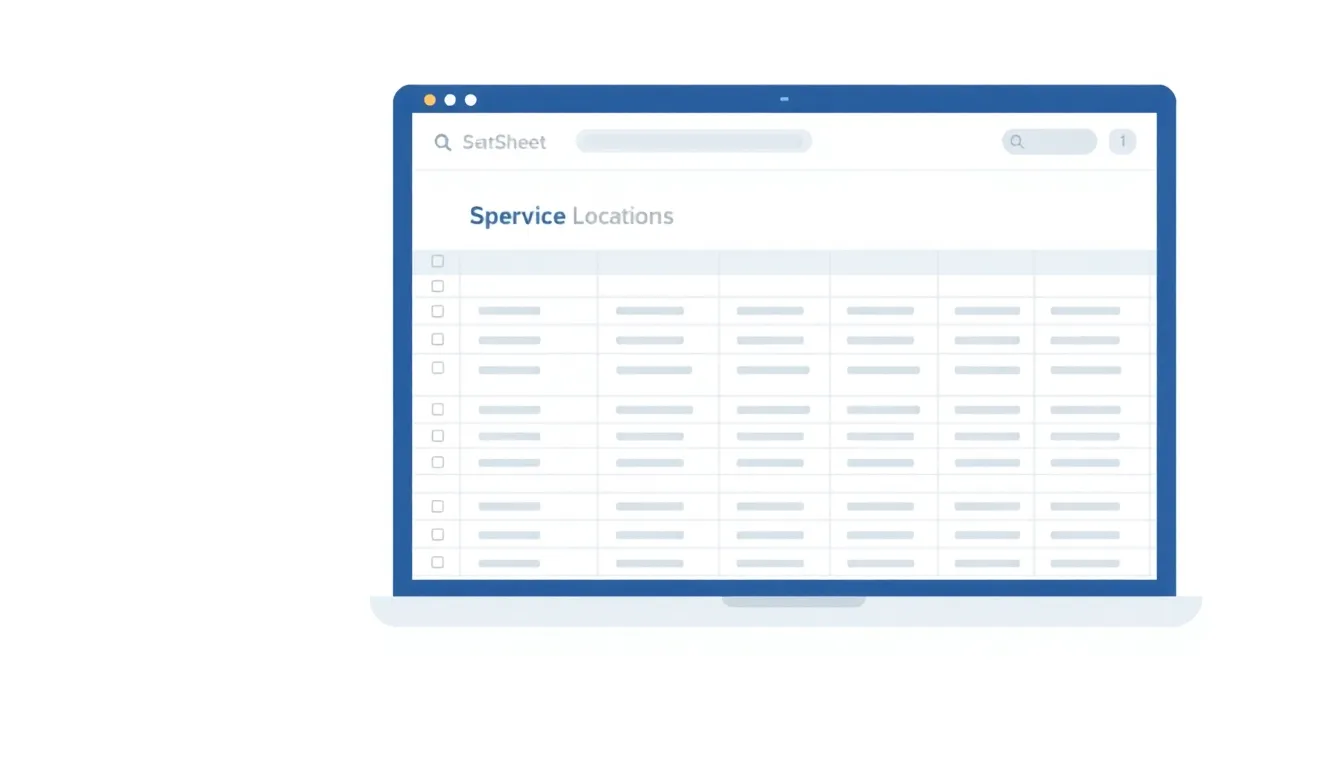
Every URL needs enough verified, differentiated detail to answer a specific question. An agent can assemble pages at scale, but it cannot manufacture local availability, product compatibility, pricing conditions, or proof from a thin record.
Programmatic SEO turns structured records and repeatable page templates into useful search pages. Templates matter. Records matter more.
Consider location-service pages with only two fields: {service} and {city}. “Bookkeeping services in Bristol” becomes “Bookkeeping services in Leeds,” Manchester, and York. The city changes, but the visitor gets no reason to trust that the firm serves the area or understands local needs.
A page deserves to exist when its record can answer questions such as:
- Is this service available in this location?
- Which local rules, tax requirements, or licensing details affect the buyer?
- What does the service include, and what changes the price?
- What local proof supports the claim?
- Which nearby areas, alternatives, or related services should the visitor consider?
A bookkeeping firm can build city-service pages with coverage status, local business types served, jurisdiction-specific filing considerations, meeting options, starting-price context, and a real contact path. A city name alone does not create distinct content.
Why do thin programmatic pages create problems?
Near-duplicate combinations waste indexation resources and create unreliable visitor experiences. Search engines see URLs that promise unique answers. Visitors see the same generic paragraph with a swapped modifier.
Use a blunt filter: if removing the entity name leaves an identical page, the record probably lacks enough unique material.
An e-commerce compatibility finder makes the issue clear. A weak page says a replacement filter “works with Model X.” A useful page shows compatible model years, dimensions, installation requirements, stock status, known exclusions, related parts, and the buyer’s pre-checkout question: “Will this fit my exact unit?”
What does the publishing system need to control?
Treat the work as a structured publishing system, not a bulk-writing exercise:
Structured records → enrichment and validation → page assembly → controlled publication → template-level maintenance
The record holds facts and relationships. Enrichment fills approved gaps, such as nearby alternatives or category context. Validation rejects missing, conflicting, stale, or unsupported fields before assembly.
Page assembly maps approved fields into a template built for one intent. Controlled publication keeps incomplete records from becoming public URLs. Template-level maintenance lets you correct an eligibility rule, disclosure, comparison module, or internal-link pattern across the collection without editing URLs individually.
An AI agent can inspect records for missing required fields, flag impossible combinations, assemble approved variations, and apply template logic consistently. It should not guess whether a service operates in a city or whether a product fits a device.
Which entity set should you start with?
Start with one entity set your business already maintains and one question each record can answer. Do not start with every imaginable keyword variation.
Useful starting points include:
- A SaaS integration directory: “Does this integration support my workflow?”
- An e-commerce compatibility finder: “Which accessory fits this product?”
- A bookkeeping firm's service-area records: “Can this firm handle my business in this location?”
- A searchable grant database: “Am I eligible for this funding opportunity?”
- Software alternative records: “Which option fits this requirement or constraint?”
List the fields each page needs before generating a title tag or paragraph. If a record cannot answer a real question with details that a competitor’s generic page lacks, keep it out of the publishing queue.
What Is Programmatic SEO for AI Agents?
Generating more URLs multiplies the cost of incomplete, inconsistent, or unhelpful records. An AI agent can publish weak pages at industrial speed when the underlying information is weak.
The word controlled defines the work. You are not asking an agent to invent articles. You are asking it to turn verified records and relationships into pages that answer a specific question.
That separates programmatic SEO from bulk AI blogging.
A page targeting “Shopify inventory integrations” should draw on integration records, compatibility facts, supported workflows, setup constraints, and product documentation. It should not repeat one prompt with different product names in the headings.
Consider two integration records. One has a product name, category, and one-line description, so it can produce only a generic definition with swapped nouns. Another includes connected products, supported triggers, workflow limits, required plans, field mappings, documentation links, and the date each fact was verified. It can help a visitor decide whether the integration fits their operation. The page earns its existence because the record contains a real answer.
Which page families work best?
Strong candidates have repeatable entities, meaningful differences between records, and searchers who need to compare or confirm something. Location-service combinations work when availability, regulations, pricing structures, or eligibility differ by city.
A payroll provider page for Austin needs more than “Austin” in a template. It needs Texas-specific eligibility and service details.
Integration directories also work well. A software product → integration → supported workflow relationship can answer whether HubSpot connects with Slack, what event triggers the connection, and which team process it supports.
Other useful families include use-case libraries, product-comparison matrices, product-fit finders, and searchable resource databases. A fit finder can combine a business type, team size, required integration, and constraint into a recommendation page when those attributes exist in your records.
The pattern is simple: each page resolves a decision that changes across entity combinations.
When should you avoid automation?
Do not automate a page family because a spreadsheet has columns. Skip combinations with no meaningful demand, no unique facts, unavailable services, or no answer beyond a generic definition.
If every city page says the same thing, you have duplicates wearing different URL slugs.
Agents need hard validation rules. When a record lacks a required attribute, source provenance, or relationship, the system should hold the page rather than fill the gap with plausible language. An elegant template cannot rescue a thin source record.
A dedicated page builder can connect data, templates, and publishing workflows. But software cannot create trustworthy compatibility facts or eligibility rules for you. Your records decide whether the pages help anyone.
Start with one page family and state its singular intent in plain language: “Help operations managers determine whether two tools integrate and for which workflow.”
Let that sentence govern required fields, template sections, validation checks, and the publishing threshold. If a candidate cannot fulfill that intent with the available data, do not publish it yet.
Build the Source of Truth Before Building Pages
A usable programmatic record needs a stable entity ID, canonical name, publish status, primary attributes, evidence source, last-verified date, and a rule for missing values. Without them, an agent can produce polished pages that quietly make false claims.
A public discussion about 70 autogenerated programmatic pages captures the risk: page count is easy to create, but dependable page-level information is not. Your agent should resolve entities, attributes, and relationships into pages. It should not turn a keyword list into generic drafts.
An entity is the specific thing a page represents, such as “Slack integration,” “Austin bookkeeping service,” or “Sony WH-1000XM6.” Give every entity an ID that never changes, even if its display name does. URLs, titles, relationships, and update history then remain connected when a vendor rebrands or a product name changes.
What should an integration record contain?
An integration directory shows the requirements clearly. A “HubSpot and Slack integration” record should store the integration name, vendor URL, supported actions, authentication method, plan restrictions, setup steps, proof such as screenshots or documentation excerpts, related integrations, and a verification owner.
The canonical name controls page titles and headings. Supported actions supply useful substance: “create contact,” “send channel message,” or “update deal stage.” Authentication details prevent vague promises such as “connect in seconds” when setup requires OAuth, an API key, or administrator access.
Keep evidence beside the claim. If a vendor help document supports “two-way contact sync,” store its URL and the date someone checked it. Do not bury proof in a browser bookmark or a marketer’s memory.
| Page family | Structured facts that can support generation | What should block automated claims |
|---|---|---|
| Integration pages | Actions, authentication, setup steps, vendor docs, related apps | Unsupported sync directions, undocumented plan access, security certifications |
| Location pages | Service areas, addresses, hours, licensed regions, local contacts | Invented local teams, availability, travel fees, customer outcomes |
| Product specification pages | SKU, dimensions, materials, compatibility, manuals | Unverified stock, prices, warranty terms, performance claims |
| Directory profiles | Official name, category, website, stated services, contact details | Rankings, reviews, compliance status, claims about quality |
| Editorial analysis | Source quotations and confirmed examples | Original judgment, reporting, nuanced comparisons, expert argument |
Verified facts and generated explanation do different jobs. A vendor’s documented API action is a fact that must remain intact. A short introduction explaining why a sales team might pair that action with a Slack alert is generated copy.
The agent may summarize approved documentation and turn attributes into plain-language use cases. It must not invent prices, compatibility, locations served, customer claims, certifications, or compliance status. Those claims carry commercial and legal weight. A fluent guess is worse than an empty field.
What happens when a field is missing?
Give missing values explicit outcomes. Do not use optimistic defaults.
When an integration lacks a documented authentication method, label it not publicly documented or route the record to review. When setup steps are incomplete but the core action and vendor proof exist, omit the setup module rather than adding boilerplate.
Some gaps must stop publication. A product page without a stable SKU or source URL can collide with another page or describe the wrong item. A location page without confirmed coverage should move to blocked, not become a speculative landing page.
Use a spreadsheet, Airtable base, CMS collection, or database table. Make the status field non-negotiable: ready, needs evidence, blocked, retired.
Put a source URL beside every high-stakes field, including pricing, compatibility, service coverage, and compliance language. MotiBlog, for example, keeps a list of product facts that its generation prompts use and its fact-check step enforces, so an agent publishing through MCP works from approved statements instead of treating each page as a fresh writing prompt.
Your AI Content Style Guide That AI Can Actually Use should translate approved terminology, capitalization, and voice decisions into generation constraints. A correct record should not become an off-brand page.
How Does an Agent Turn Records Into Useful Pages?
An agent maps validated fields to a modular template and renders only sections the record can support. A title, slug, and one-line description are not enough. They create pages that look complete while making unchecked claims.
Take a fictional Slack and HubSpot integration-directory record. Before generation, the agent needs compatibility status, supported platforms, documentation URLs, pricing status, workflow details, limitations, and a last-verified date.
That record becomes a publishing contract.
| Field class | Example field | Agent action |
|---|---|---|
| Approved field | supports_lead_notifications: true | States the capability on the page |
| Verification-required field | pricing_status | Checks the linked pricing or documentation page before using it |
| Computed field | Canonical slug and breadcrumb | Generates it from deterministic URL rules |
| Generation-blocking field | Missing compatibility status | Omits the page or routes the record for review |
| Optional enrichment field | Supported workflow category | Renders related links when present |
This prevents a common mistake: treating every non-empty row as publishable. A record without evidence for setup steps should not receive a “How to set it up” section filled with generic instructions.
How should URL rules handle integration pairs?
URL logic must stay deterministic because search engines and visitors need one permanent address for the same relationship. For a symmetric pairing, use a canonical pattern such as:
/integrations/hubspot/slack/
Choose one ordering rule. Alphabetical slugs work for genuinely two-way compatibility pages. When the relationship has direction, put the trigger system first: /integrations/slack/hubspot/ means Slack triggers an action in HubSpot.
Redirect the reversed URL permanently to the canonical version. Without that rule, both versions can compete for the same query, split links, and create duplicate content.
Do not let an agent improvise slugs from page titles. Normalize lowercase names, remove unsupported characters, maintain an alias map for renamed tools, and reserve redirects for legacy URLs.
Which page modules deserve a place in the template?
Use fixed structure, not fixed wording. Render these modules only when their fields pass validation:
- Intent-led H1 that names the relationship and user task.
- Compatibility summary with supported status and scope.
- Supported workflows from approved trigger, action, or use-case fields.
- Requirements and setup guidance linked to current documentation.
- Limitations that state exclusions, plan restrictions, or missing support.
- Alternatives when the record contains meaningful related options.
- Evidence notes with verification dates and source links.
- FAQ only when the dataset supports genuine questions and answers.
- Clear next step that matches the page’s commercial or instructional intent.
A Slack-to-HubSpot page should not read like a HubSpot-to-Stripe page with names swapped. The first can explain notification triggers, contact alerts, and lead-routing limits. The second should focus on payment events, subscription status, and revenue-operations workflows.
Put that difference in the data model and rendering rules. Do not rely on a vague prompt to “make each page unique.”
What metadata and schema rules keep pages honest?
Metadata should combine entity names with a real benefit, not cram every variation into a title. Set a title-length check of roughly 50–60 characters. Reject titles that truncate the actual tool names or promise unsupported outcomes.
Descriptions should summarize what visitors find: compatibility status, supported workflows, and setup constraints. If the page lacks pricing details, do not tease pricing in the description.
Schema helps search engines interpret page elements. Use it only when the page earns it:
BreadcrumbListfor directory hierarchy.SoftwareApplicationorProductwhen the page accurately describes a specific application or product.FAQPagefor visible, answerable on-page questions.ItemListfor curated category and directory pages.
Do not invent reviews, pricing, or FAQs in markup. That may create a richer-looking page, but it makes the site less trustworthy and harder to maintain.
How should internal links follow the data?
Internal links should reflect real record relationships. An integration-pair page can link to each individual integration, its workflow category, relevant alternatives, and comparison pages when that relationship exists.
MotiBlog, for example, reads the published sitemap to build the page list its internal linker chooses from, so links point at pages that exist. Which records relate to which is still a rule that belongs in your data. The agent should never add a “related” link because two slugs share a word.
Create one template specification that lists every module, its required fields, optional fields, and blocking conditions. It tells the agent what to render, omit, and escalate before a record becomes public.
Validation Rules Keep Scaled Pages From Becoming Scaled Garbage
Quality control needs machine-checkable thresholds that block bad records before drafting and flag weak pages before publication.
Imagine near-identical project-management-tool records. Both include a name, pricing model, and short description. One connects to GitHub and supports self-hosted deployment; the other connects to Salesforce and targets client-service teams.
Without validation, the agent can generate interchangeable pages with swapped product names. That is scaled garbage.
Input validation rules are explicit conditions a record must meet before an agent generates a page. They turn “write quality content” into a publishing decision the system can enforce.
Every factual claim needs a required source URL. Category fields must match an allowed-value list rather than accept loose entries such as “agency,” “agencies,” and “agency teams.” Volatile fields, including pricing, availability, and integration status, need freshness windows. Entity IDs must resolve to active records, not deleted products or retired services.
Those checks change output before the page exists. The GitHub record can receive an engineering-workflow module, a self-hosting section, and links to deployment-related pages. The Salesforce record can receive a client-operations module, CRM-related schema fields, and links to agency workflow pages.
Verified differences should drive the URL, title, metadata, internal links, and comparison language. A template that ignores them creates duplicate intent even when every paragraph uses different wording.
| Validation location | What it should enforce | Best use |
|---|---|---|
| Agent prompt | Required fields, prohibited unsupported claims, conditional modules | Stops the agent from improvising around absent evidence |
| Database automation | Allowed values, active entity IDs, freshness dates, duplicate relationships | Rejects broken records before they enter a generation batch |
| Publishing workflow (MotiBlog, for example) | A review queue that shows quality-gate blockers and a fact-check report before approval | Keeps a page that failed a check out of the publish step |
Duplicate detection needs two passes. First, inspect the dataset for duplicate entities, repeated aliases, and conflicting relationships. If “Acme Projects” and “Acme Project Management” point to the same vendor, pages split authority and confuse visitors.
Then inspect rendered pages. Compare titles, meta descriptions, opening sections, schema fields, and major modules across the batch. Records may differ technically yet generate pages with the same intent, claims, and internal-link pattern.
That pair needs a rewrite, merge, or different template route.
Not every missing field deserves the same response. A directory record without setup steps may still publish as a shorter, verified listing when core facts hold. A compatibility page without compatibility evidence must remain blocked.
Generic prose cannot repair an evidence gap. It only hides the gap until a visitor notices.
Use a preview queue before release. For a sampled batch, show field sources beside the rendered URL, title, schema, internal links, missing modules, and validation status. Reviewers should see why a section appeared, not guess from finished copy.
Consider a hypothetical agency-service dataset. Some rows lack evidence that the service remains available. The agent generates previews for complete records, routes incomplete rows to enrichment, and never fills the missing availability field with a broad claim such as “available for growing teams.”
That is the right failure mode. A blocked page is recoverable; a confidently wrong page creates cleanup work across rankings, links, and customer trust.
Require every mandatory field, zero critical unsupported claims, sufficient rendered-page uniqueness, a valid canonical URL, and no conflict with an existing page. Classify each threshold as a pass, warning, or block rule in the agent prompt, database automation, or publishing workflow.
Pages earn their place through evidence. Not fluent filler.
AI Writers, Page Builders, and Agent-Native Systems Serve Different Jobs
A page family can look acceptable one record at a time and still fail as a set. Problems often appear after generation: every page makes the same vague value claim, a key attribute lacks attribution across a category, or a template forces unrelated records into identical sections.
An AI writer drafts text. A programmatic page builder renders records through templates. An agent-native system coordinates checks, exceptions, publishing actions, and later maintenance.
That difference matters. Publishing weak pages is one system problem repeated many times, not many separate writing problems.
What each type of tool is built to do
The three operating models overlap, but each handles a different part of the work.
-
AI writers primarily generate article or page copy. They help when the central task is turning a prompt into a draft. They do not inherently know which source field is authoritative, which record needs an exception, or whether a change should update a related page family.
-
Programmatic page builders such as SEOmatic turn structured records into pages through templates. Choose this category when records are ready, the layout is stable, and the job is rendering URLs consistently.
-
Agent-native systems handle the operating layer around generation. In that model the agent should be able to inspect persistent site context, check claims against approved product facts, apply page-level rules, route exceptions, publish through connected systems, and revisit pages as source records or search performance change.
A writer can create a polished paragraph for a record with an incomplete field. A builder can place it in a clean template. Neither action fixes the field.
Where the operational gap appears
Use one record correction to test what your stack can and cannot do.
Suppose a software comparison page lists an integration that your product no longer supports. The right system identifies every dependent page, removes or revises the claim, runs duplicate and completeness checks again, then queues affected URLs for republication.
If the fix requires opening CMS URLs, searching for wording, and editing pages individually, you do not have programmatic maintenance discipline. You have a batch publishing workflow with a manual repair bill.
Agent-native operations should connect these capabilities:
- Validate source records before generation uses unsupported, missing, or stale attributes.
- Render templates with conditional sections that fit the record rather than forcing every record into the same copy shape.
- Detect duplicates across titles, introductions, value sections, and page-level claims.
- Route exceptions when a record fails a rule instead of quietly publishing a compromised page.
- Publish controlled changes through the CMS rather than treating export files as the finish line.
- Refresh affected pages after a source correction, template revision, or performance signal calls for it.
The hard part is not producing text at scale. It is preserving a reliable relationship among each source record, rendered page, and later correction.
Don’t confuse adjacent AI SEO products with publishing control
You will encounter many AI SEO products while evaluating options. Some focus on audits, some on recommendations, some on generation, and some on broader agent workflows.
Those capabilities may help, but ask the revealing question: can the tool enforce record-level publishing rules before it creates or updates a URL?
Test that question with one controlled failure. Remove a required attribution field, introduce an unsupported attribute combination, or alter a shared template section. Then trace the result.
A capable system stops affected pages, explains the failure, preserves the exception state, and updates the page family after the underlying correction. Anything less turns quality control into a cleanup project.
Operate the Page Set as a Living Product
A polished draft is not a governed publishing system, even when both use AI. Programmatic SEO maintenance happens at the source-record and template level, while page-by-page edits handle genuine exceptions.
That distinction determines whether a large URL set becomes an asset or a cleanup project. A writing tool produces copy. A visual builder displays it. An agent-native system preserves the rules, records, and publishing decisions that keep the page family manageable after launch.
Three operating models show the difference. A chat-based writing workflow keeps records in prompts and uploaded files, so every rule lives in someone’s memory and every page is a copy-and-paste handoff. A CMS-driven workflow renders collections through templates and publishes reliably, but the checks that run before a record becomes a page depend on how you configure that CMS, and you should test them rather than assume them. MotiBlog’s programmatic generation takes structured rows and a title template, creates one content plan per row, and routes each generated article through the same fact-check and review queue as an editorial post, so the approval step is where a bad record stops.
The weak model treats each URL as a finished article. The stronger model treats every URL as one rendered instance of a maintained product.
How should you read performance across hundreds of pages?
Group reporting by page family, not a scrolling spreadsheet of URLs. Google Search Console reports by URL and query, not by your record metadata, so encode the page family in the URL path (/integrations/, /locations/) and filter the Pages report by that prefix or a regular expression. For template version, entity category, and completeness tier, export the Search Console data and join it to your source records in a spreadsheet or database, because Search Console cannot filter on fields it has never seen.
Those joined views reveal patterns that URL-level reporting hides. If pages from a newer template earn impressions but few clicks, titles, snippets, or page framing likely cause the problem. If only records with partial compatibility data fail to index, incomplete records cause the problem.
Ask whether one entity category attracts irrelevant queries, whether a newer template changes indexation, and whether sparse records consistently underperform. You can then fix the cause once instead of rewriting many pages with the same flaw.
What should trigger a refresh or removal?
Start refreshes with a changed fact or broken operating rule, not an arbitrary content calendar. A vendor can change an integration. A local business can close. Pricing, eligibility, inventory, supported regions, and verification dates can change without warning.
When a source record exceeds its verification window, block publication or trigger review. Do the same when a page type shows weak indexation across a meaningful batch. Do not refresh these pages by adding adjectives. Correct the underlying record, rule, or template.
Use firm retirement rules for discontinued entities. Remove their internal links first. Redirect a URL only when a genuinely equivalent replacement exists; redirecting every retired integration page to a broad category page creates a poor visitor experience and muddles intent.
When no replacement exists, return a 410 status and mark the source record as retired so the agent cannot recreate it later.
How do template improvements beat manual rewrites?
Suppose integration pages earn impressions for compatibility searches but attract few clicks. Rewriting each body is slow and usually wrong.
Test a clearer title pattern and a compatibility summary near the top of the template. For example, replace a vague title such as “Acme and Stripe Integration” with language that states the relationship and qualified condition the record supports.
Apply the revision to a preview batch, inspect rendered pages, then deploy it to records that meet the same criteria. This preserves provenance: you can explain which template version produced a page, which source fields fed its claims, and why an exception exists.
New page families also need deliberate connections to editorial pages without claiming the same search intent. Use the principles in AI Content Clusters Without Keyword Cannibalization to decide where programmatic pages support deeper guides rather than compete with them.
Set a monthly page-family review around data freshness, blocked records, indexation by template, performance outliers, and template changes ready to deploy. Start with one bounded family, validate a preview batch, and publish only records that meet thresholds.
Let corrections and template improvements determine the next release.
Build the System, Then Scale It
Treat programmatic SEO as a product system, not a publishing sprint. Start with one high-value page type, define its structured data and validation rules, and give your agent clear approval and refresh workflows before expanding the URL set.
That foundation turns AI from a fast writer into a reliable content operator. It can generate useful pages, catch weak records, publish through your stack, and learn from Search Console signals over time.
MotiBlog exposes that lifecycle to agents through MCP: approved product facts, programmatic generation from structured rows, a review queue with quality-gate results, and Search Console feedback after publication. Build fewer pages with stronger truth first. Then let your system earn the right to scale.